




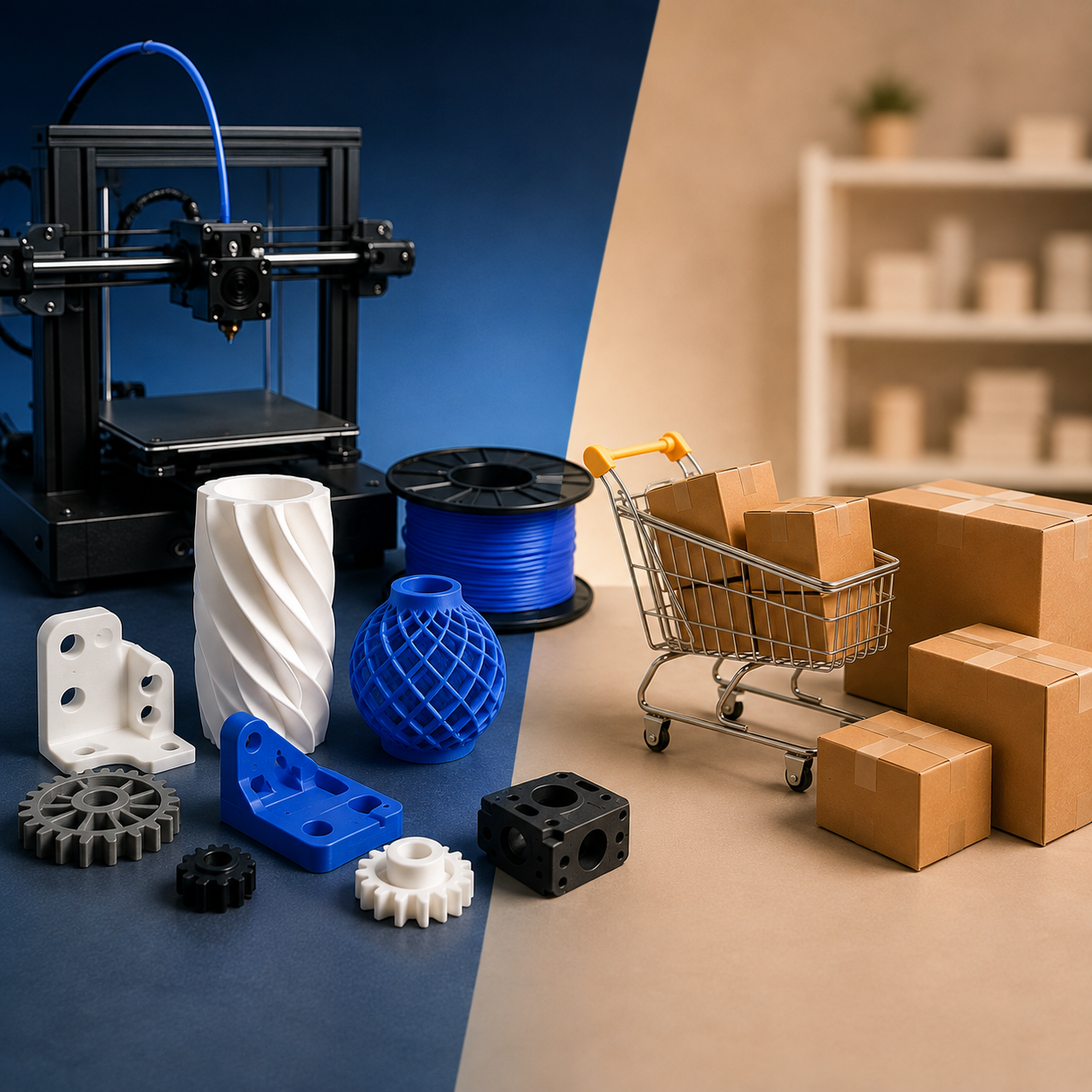
When you need a particular product, component, replacement part, prototype, or customized item, one question often comes up: Is it cheaper to 3D print the product or simply buy it?
The answer depends on several factors, including the product’s design, material, quantity, customization requirements, manufacturing method, and how quickly you need it.
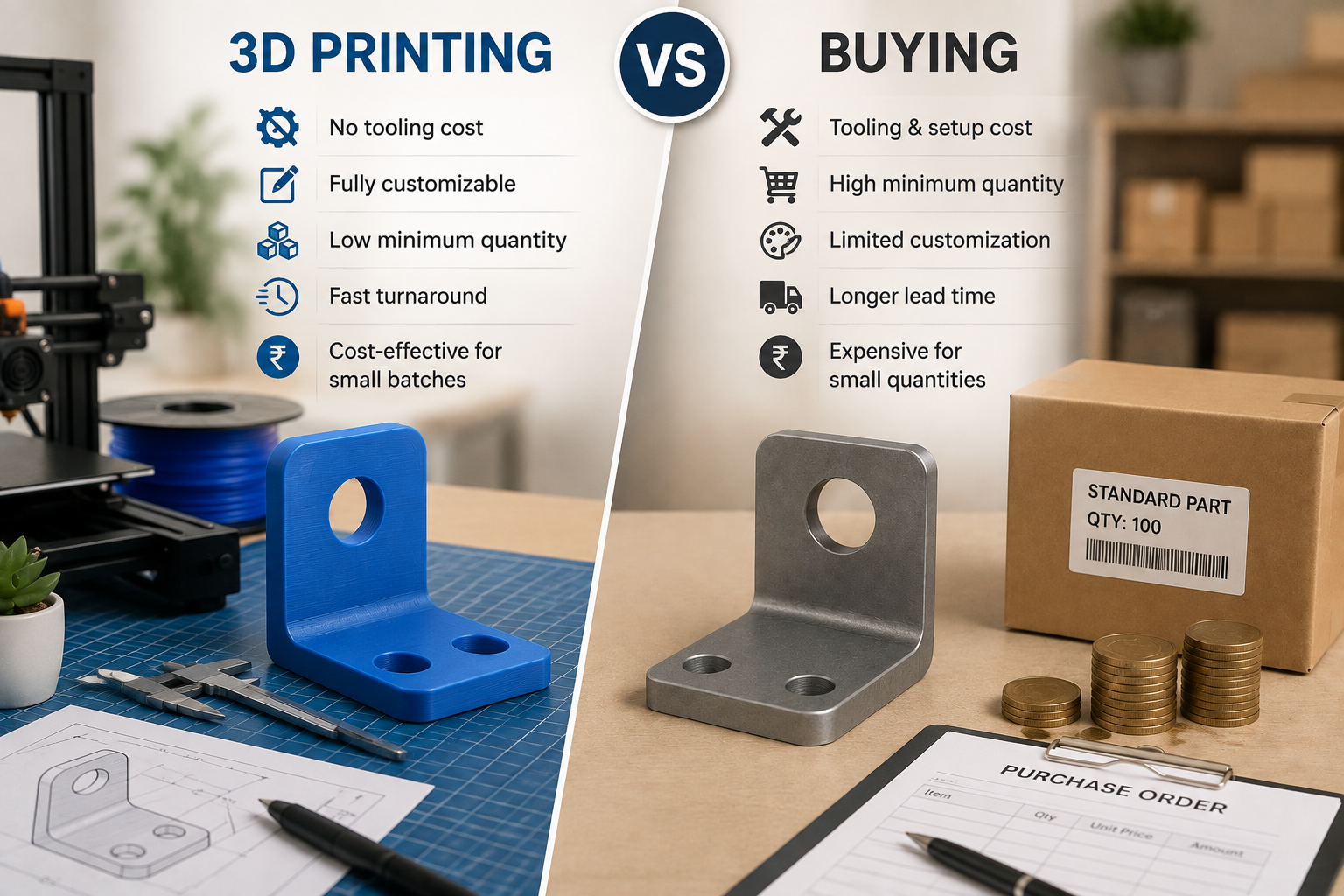
For some products, buying a ready-made item from the market will be the more affordable option. But for custom parts, prototypes, small-batch production, replacement components, and unique designs, 3D printing can be a highly cost-effective solution.
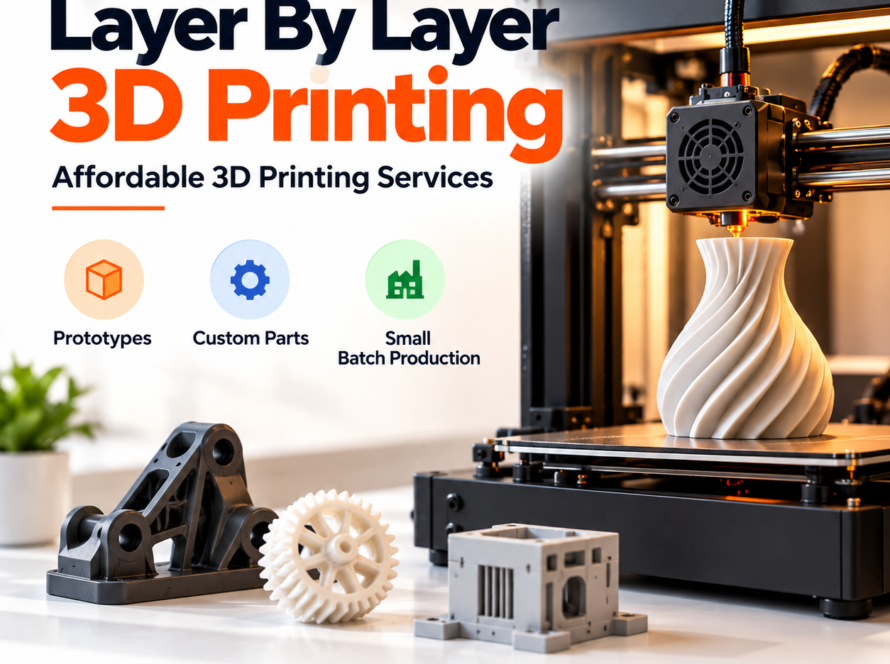
At Layer By Layer, we help businesses, startups, manufacturers, designers, students, and individuals turn digital designs into physical products without the high setup costs often associated with traditional manufacturing.
When Is Buying a Product Cheaper?
If a product is mass-produced and easily available in the market, buying it is often more economical.
Large manufacturers benefit from economies of scale. They can produce thousands or even millions of identical products, reducing the manufacturing cost per unit. A simple plastic component that is already available commercially may therefore cost less to purchase than producing a single copy through 3D printing.
For example, if you need a standard phone stand, cable holder, storage box, or commonly available household item, purchasing an existing product may be the better choice.
The equation changes when the product is not readily available or needs to be modified.
When Can 3D Printing Be Cheaper?
3D printing becomes particularly attractive when you don’t need thousands of identical products.
1. Custom Products
Customization can make conventional manufacturing expensive. Creating molds, tooling, or specialized production setups for a one-off product may not make financial sense.
With 3D printing, a digital design can be modified and produced without creating expensive tooling.
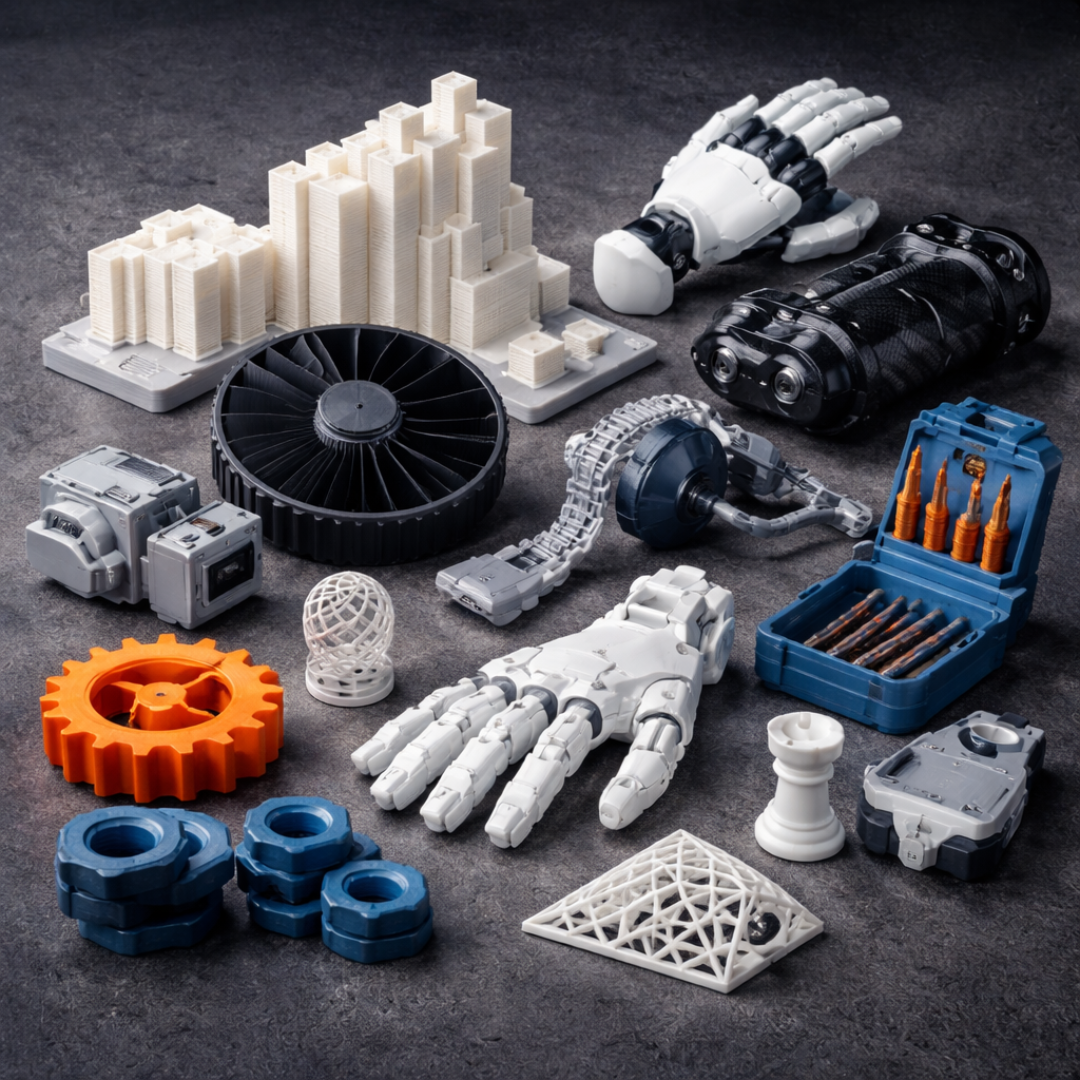
Whether you need a customized enclosure, product prototype, bracket, holder, model, fixture, or personalized component, 3D printing can make low-volume manufacturing more practical.
2. Small Quantity Orders
Traditional manufacturing methods are generally designed for larger production volumes. Tooling and setup costs can make small orders expensive.
3D printing works differently.
You can produce one part, a few parts, or a small batch without necessarily investing in expensive molds or tooling. This makes it particularly useful for startups, product developers, engineering teams, and businesses testing a new product.
If you only need 5, 10, 20, or 50 customized components, 3D printing may offer a better cost-to-production balance.
3. Prototypes
Imagine you have designed a new product but don’t know whether it will fit, function, or look the way you expect.
Ordering a large production run before testing the design can be expensive.
3D printing allows you to create a prototype, test it, identify problems, make changes to the CAD design, and print another version.
This can reduce development costs and help businesses avoid expensive mistakes before moving into mass production.
4. Replacement Parts
One of the most useful applications of 3D printing is producing replacement parts that are difficult to find.
A small plastic component may no longer be manufactured, may not be available locally, or may have to be imported at a high price.
If the part can be recreated digitally, 3D printing may provide a practical alternative.
Instead of purchasing an entire assembly because one small component has broken, you may be able to manufacture only the required part.
5. Complex Designs
Some designs are difficult or expensive to manufacture using traditional processes.
3D printing allows manufacturers to create complex geometries, internal structures, customized shapes, and lightweight designs that may require multiple manufacturing steps using conventional methods.
This can reduce assembly requirements and, in some cases, lower overall production costs.
What Determines the Cost of a 3D Printed Product?
The price of a 3D printed component isn’t determined only by its size.
Several factors influence the final cost.
Material
Different materials have different prices and properties. Depending on the application, you may require materials with specific strength, flexibility, durability, heat resistance, or appearance.
The right material should be selected according to how the product will be used.
Weight
For many 3D printing applications, material consumption is an important part of the cost.
A lightweight design can therefore be more economical than a solid design, provided it meets the required strength and functionality.
At Layer By Layer, 3D printing services start from ₹6.50 per gram, making 3D printing accessible for prototypes, custom components, and small production requirements.
Design Complexity
A simple part may require less printing time and material than a highly detailed component.
The geometry, support requirements, infill, wall thickness, and overall design can affect production time and cost.
Quantity
The number of parts you need also matters.
If you need only one customized component, 3D printing can eliminate the need for expensive tooling. For larger quantities, production planning becomes increasingly important, and different manufacturing methods may become more economical depending on the product.
3d Printing Technology
Different applications require different technologies.
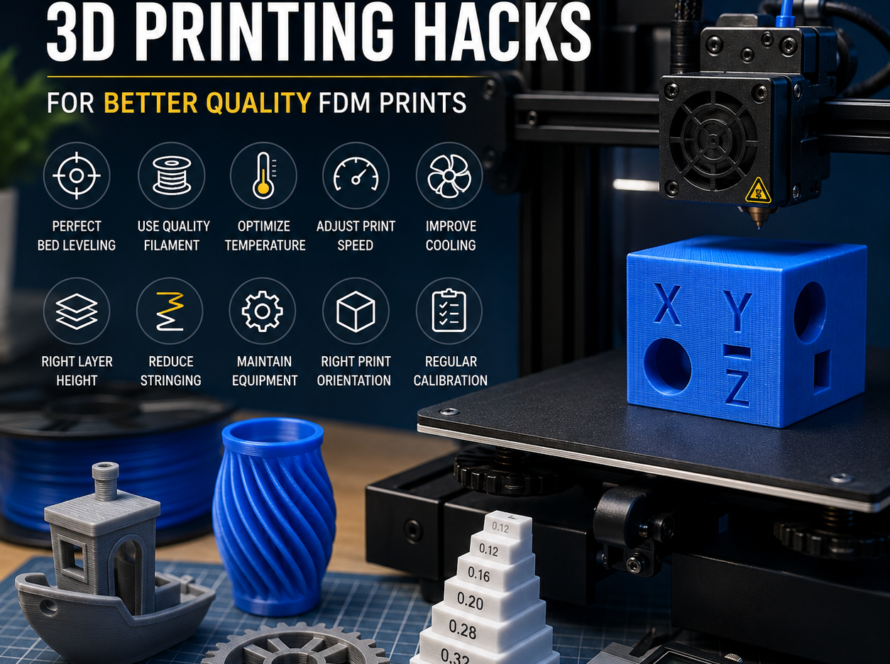
- FDM/FFF printing is commonly used for functional prototypes, components, fixtures, models, and general-purpose parts.
- Resin printing can be useful when detailed surfaces and fine features are important.
- SLS and other advanced technologies can be suitable for particular engineering and production applications.
- The best option depends on the product rather than simply choosing the most expensive technology.
3D Printing vs Buying: A Simple Example
Suppose you need a customized plastic bracket for a machine.
You search online but cannot find the exact size. A standard bracket costs ₹200, but it doesn’t fit your machine.
You could purchase the standard bracket and modify it, but that may compromise its strength or functionality.
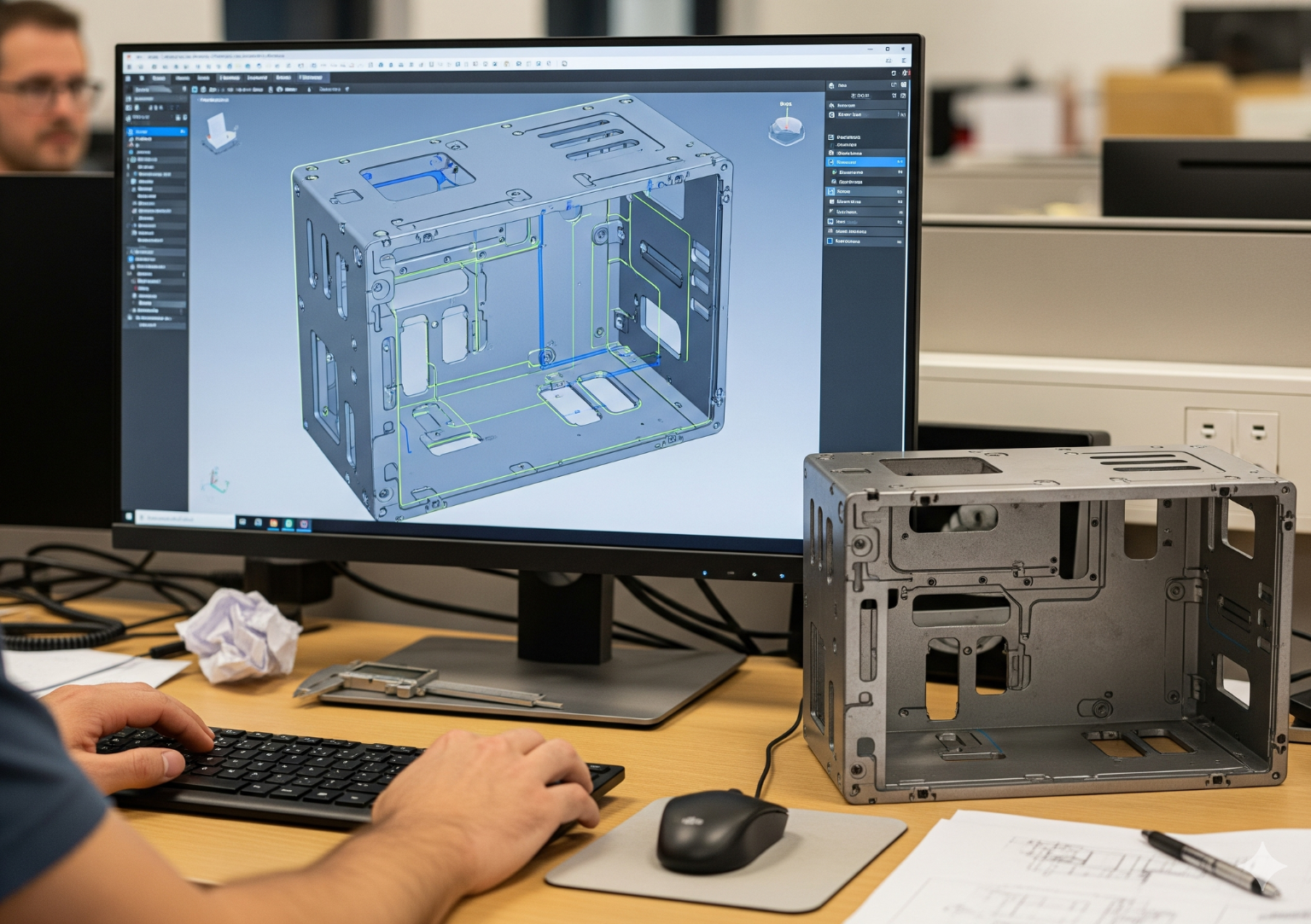
Alternatively, you can create a CAD design specifically for your machine and 3D print the required component.
If you only need a few brackets, the 3D printed option could provide better value because you are paying for exactly what you need instead of purchasing and modifying an unsuitable product.
Now consider a different example.
Suppose you need 1,000 identical standard plastic containers that are already mass-produced and readily available. In this situation, buying the finished products may be considerably more economical than 3D printing each one individually.
This is why the cheapest option depends on the application.
Is 3D Printing Always Cheaper?
No.
This is one of the most important things to understand.
3D printing isn’t automatically cheaper than every commercially available product.
If a product is mass-produced, standardized, and available at a low retail price, buying it can be more economical.
The real advantage of 3D printing is flexibility.
You can produce products according to specific dimensions, modify designs quickly, manufacture small quantities, create prototypes, and produce parts that may not be commercially available.
Instead of asking only, “Is 3D printing cheaper?”, it is better to ask:
“Which manufacturing method gives me the best value for my specific requirement?”
How 3D Printing Can Reduce Overall Costs
The cost of a product isn’t always limited to its purchase price.
Consider the additional expenses associated with buying a product:
- Shipping costs
- Minimum order quantities
- Import charges
- Customization costs
- Storage
- Tooling or modification
- Long delivery times
- Replacement of an entire assembly
- Product development costs
3D printing can help reduce some of these costs by enabling on-demand and localized production.
For businesses, this can be especially useful for prototypes, jigs and fixtures, replacement parts, product samples, and small production batches.
3D Printing for Startups and Small Businesses
Startups often don’t have the budget to invest heavily in molds and tooling during the early stages of product development.
3D printing provides a way to test ideas without committing to large production quantities.
A startup can design a product, print a prototype, test it, collect feedback, make modifications, and repeat the process.
Once the design has been validated and demand is established, the company can decide whether to continue with 3D printing or move to another manufacturing process.
This makes 3D printing an excellent tool for product development and rapid prototyping.
Why Choose Layer By Layer for 3D Printing?
At Layer By Layer, our goal is to make professional 3D printing accessible and affordable for individuals and businesses across India.
We support requirements ranging from prototypes and customized products to functional components and bulk orders.
Our services include FDM 3D printing, resin 3D printing, rapid prototyping, custom 3D printing, and production parts.
Whether you have an existing STL file or need assistance understanding your printing requirements, the right printing approach can help you achieve the required balance between cost, quality, strength, appearance, and production time.
With prices starting from ₹6.50 per gram and bulk orders accepted, Layer By Layer can be a practical option for businesses looking for affordable 3D printing solutions.
Layer By Layer – Affordable 3D Printing in Delhi, India
Layer By Layer is the most affordable 3D printing company in Delhi, India, offering cost-effective solutions for prototypes, customized products, functional components, replacement parts, and small-batch manufacturing.
With 3D printing starting from ₹6.50 per gram and bulk orders accepted, businesses, startups, designers, engineers, and individuals can access professional 3D printing without the high costs associated with traditional manufacturing.
Whether you need a single prototype or multiple production parts, Layer By Layer focuses on delivering the right balance of affordability, quality, customization, and turnaround time.
How to Decide: Print or Buy?
Before choosing between buying and 3D printing, consider these questions:
Is the product already available?
If yes, compare the purchase price with the estimated printing cost.
Do you need customization?
If the standard product doesn’t meet your requirements, 3D printing may provide better value.
How many units do you need?
Small quantities often make 3D printing attractive because there may be little or no tooling requirement.
How quickly do you need it?
If sourcing a component takes weeks, local 3D printing can provide a faster solution.
Is the product a prototype?
For prototypes, 3D printing can significantly reduce development time and allow multiple design iterations.
Is the part difficult to find?
If the product is discontinued or unavailable, 3D printing can be an alternative worth exploring.
Final Verdict: Print or Buy?
So, is it cheaper to 3D print or buy the same product?
Sometimes it’s cheaper to buy. Sometimes it’s cheaper to print.
For standard, mass-produced products, buying is often the better option.
For custom products, prototypes, replacement parts, small batches, unique designs, and products that are difficult to source, 3D printing can offer significant advantages.
The biggest benefit isn’t simply the price of the printed part. It’s the ability to make what you need, when you need it, in the quantity you need.
If you have a product idea, CAD model, prototype, replacement component, or custom part that you want to manufacture, compare the options before making a decision.